Tesla Reverses Course on Self-Driving Maps
The automaker admits its vision-only system struggles with basic navigation tasks, prompting a return to fleet-based mapping.
By Khalid Rahman ·
For years, the prevailing narrative in the autonomous vehicle industry has been a stark divide between two distinct philosophical approaches to solving the driving problem. One camp relies on detailed, pre-mapped environments and high-precision sensors, while the other champions a vision-based, generalizable intelligence that can navigate any road without prior knowledge. This long-standing debate has finally begun to blur as one of the most vocal proponents of the vision-only approach has acknowledged a need for the very tools it once dismissed.
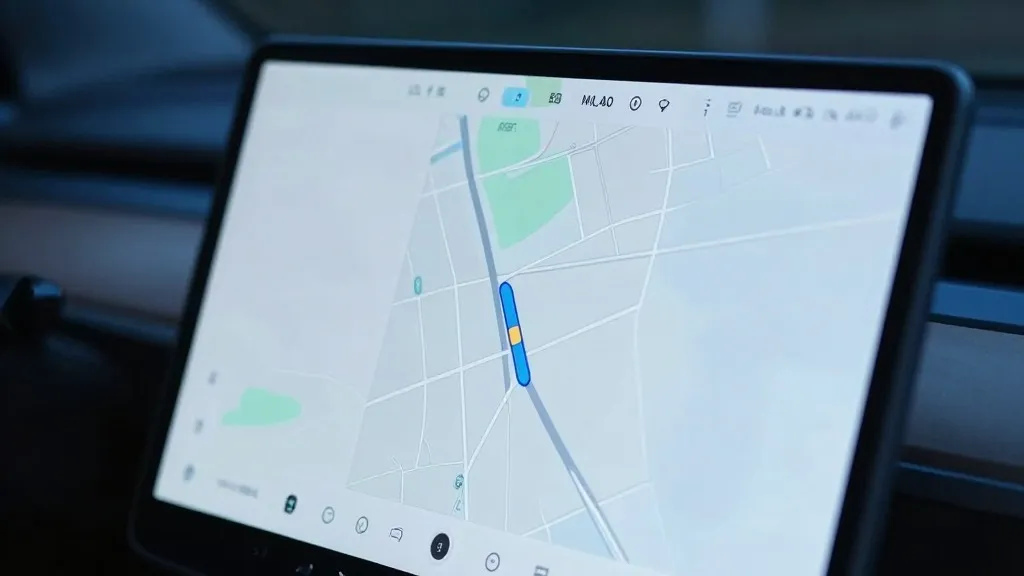
During the Q3 2026 earnings call, Tesla’s Vice President of AI, Ashok Elluswamy, revealed that the company is developing its own internal maps to address persistent issues with its Full Self-Driving (FSD) system. The announcement marks a significant pivot for a company whose CEO famously argued that reliance on maps makes self-driving systems brittle and prone to failure. Elluswamy stated that the new architecture, powered by AI and fed by data from the company’s massive fleet of vehicles, is designed to eliminate dependency on third-party navigation data.
The decision appears to be a direct response to specific, recurring failures in the current FSD software. A retail investor’s question during the shareholder Q&A highlighted that mapping remains a significant pain point, specifically citing speed limit recognition, parking maneuvers, and route selection as the most common errors. Elluswamy agreed that Tesla should not rely on external providers for this critical data, confirming that the new system will learn individual driver preferences and respond to voice commands. The technology is slated to begin handling the start and end of trips with FSD v15, with broader navigation and parking capabilities to follow in subsequent months.
This move contradicts a stance Tesla held for nearly a decade. In 2015, shortly after launching Autopilot, the company claimed it was building high-precision maps with granular detail far exceeding standard navigation tools. However, at its 2019 Autonomy Day event, CEO Elon Musk declared that high-precision lane maps were a mistake, labeling them a "really bad idea" that rendered systems "extremely brittle." In that same presentation, he dismissed lidar as a "fool’s errand," positioning Tesla’s camera-only approach as the superior, universal solution that could operate anywhere without pre-mapping.
Critics argue that the problems Tesla is now trying to solve with its new maps are fundamentally about understanding the physical environment. Recent data underscores these challenges: a Belgian road safety group found that FSD exceeded speed limits in 55% of 30 km/h zones tested in Brussels, often because the car’s display incorrectly showed a 50 km/h limit. Meanwhile, the U.S. National Highway Traffic Safety Administration is weighing an investigation into reports that Tesla Robotaxis speed through active school zones, involving approximately 1,000 Model Y and Cybercab vehicles. If a vision system cannot reliably read a simple speed limit sign, the argument for pure vision-based driving becomes more tenuous.
The new strategy brings Tesla’s operational model closer to that of its competitor, Waymo. Waymo maps cities by driving sensor-equipped vehicles through them before launching service and continuously updates these maps as its fleet operates. Tesla is now describing a similar process, where its cars collect visual data that feeds into a proprietary map to improve performance across the fleet. The primary technical difference remains the presence of lidar on Waymo vehicles, but the underlying logic of using a fleet to build and maintain a map is now shared by both companies.
This shift also aligns with how Tesla’s Robotaxi service is currently deployed: in small, geofenced areas within specific cities, with Tesla managing the operations. While the company is not currently advertising centimeter-level high-definition maps, a map built from millions of vehicles has the potential to become increasingly detailed over time. The move suggests that the distinction between "true" self-driving and geofenced, map-assisted driving is less clear than previously presented.
The timeline for unsupervised FSD in consumer cars remains targeted for Q2 2027, though industry observers note that the need for this mapping infrastructure adds another layer of complexity to that rollout. The development highlights that while no serious autonomous driving program operates without maps, the speed at which a company can build and refine them may be the deciding factor in real-world reliability. For now, Tesla is admitting that its vision system requires the environmental context that maps provide, a concession that reshapes the competitive landscape of autonomous driving.
Source: Electrek