Silent Hunters: Displaced Wolves Enter Finnish Villages After Massive Tech-Driven Deforestation
The sudden appearance of wolves in nearby communities is a direct consequence of Google's unauthorized clearing of over 1,300 acres of forest, which has left the local landscape as a vast expanse of mud.
By Yasmin Farouk ·
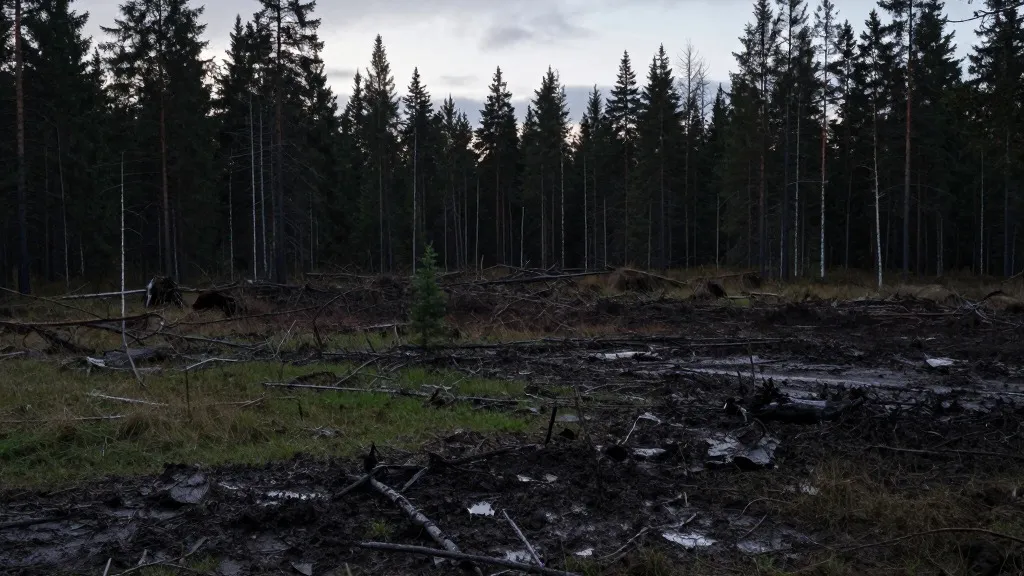
For residents of Otanmäki and neighboring villages in eastern Finland, the quiet rhythm of rural life has been disrupted by an unexpected and potentially dangerous visitor: the wolf. These animals, which traditionally maintained a respectful distance from human settlements, are now wandering into the countryside due to the destruction of their natural habitat. This shift is not a random ecological fluctuation but a direct result of recent industrial activity that has fundamentally altered the local terrain, turning dense woodland into open, muddy fields where wild animals have no choice but to move closer to human populations for survival.
The primary driver of this ecological displacement is the aggressive expansion of AI data centers by Google. The company’s Finland country manager has issued an apology for unauthorized forest clearings near the town of Muhos, acknowledging that the project has transformed 816 acres of forest into what locals describe as a vast expanse of mud. This specific area of degradation has created a barrier for wildlife, forcing packs that once roamed these forests to seek new territory. The visual and physical impact is stark: where there was once a complex ecosystem supporting various species, there is now a flattened, wet landscape that offers little cover or food for the animals that lived there.
Local residents are feeling the direct effects of this change in their daily lives. Anni Ranta, 53, whose family has lived in Otanmäki for generations, noted that the displacement of wildlife is now a tangible reality for the community. "We had wolves coming into the village because all the wild animals moved out of the forest," she explained. For families in the region, this is more than an environmental concern; it is a serious matter of human safety. The presence of large predators in areas previously considered safe is causing significant anxiety among neighbors who have lived in these communities for decades without such encounters.
The scale of the intervention is substantial, extending beyond the immediate vicinity of Muhos. Google has also been ordered to cease work in areas where roughly 500 acres of forest were cleared, located 55 miles southeast of Otanmäki. In total, the unauthorized clearings amount to approximately 1,300 acres. This extensive removal of tree cover has not only displaced wolves but has also affected other wildlife, pushing rare bird species out of the area and altering the local hydrology. Streams in the region have reportedly turned brown due to the construction activity, adding to the list of environmental grievances held by the local population.
Regulators in Finland have moved to intervene, reflecting the growing tension between rapid technological infrastructure development and environmental protection. The Finnish Licensing and Supervision Authority (LVV) issued an order for Google to stop its development activities near both Muhos and Otanmäki. A representative of the Finnish Association for Nature Conservation (SLL) described Google’s adherence to environmental policy as "unprecedented and clear," indicating a significant departure from standard regulatory expectations. The authority’s decision to halt work signals that the local government views the current pace and method of construction as incompatible with existing environmental protections.
Despite the regulatory pressure and local outcry, Google has maintained a posture of cooperation. A company spokesperson stated, "We will fully comply with LVV’s requests in this matter," and expressed a desire to maintain an active dialogue with authorities to strengthen the company’s partnership with Finland. The company appears to be betting that the long-term business benefits of its AI infrastructure will eventually outweigh the short-term environmental and social friction. This approach mirrors strategies seen in other countries, where tech giants have faced similar complaints about noise, water quality, and habitat loss during the construction of massive data centers.
The situation in Finland highlights a broader trend in the global race to build AI infrastructure. As demand for computing power surges, developers are targeting locations with reliable energy and land, sometimes at the cost of local ecosystems. The case of the wolves in Otanmäki serves as a vivid example of how these large-scale projects can have immediate, tangible consequences for the people and wildlife living nearby. As Google continues to navigate its relationship with Finnish regulators and residents, the balance between technological progress and environmental stewardship remains a critical and unresolved issue in the region.
Source: Tom's Hardware